
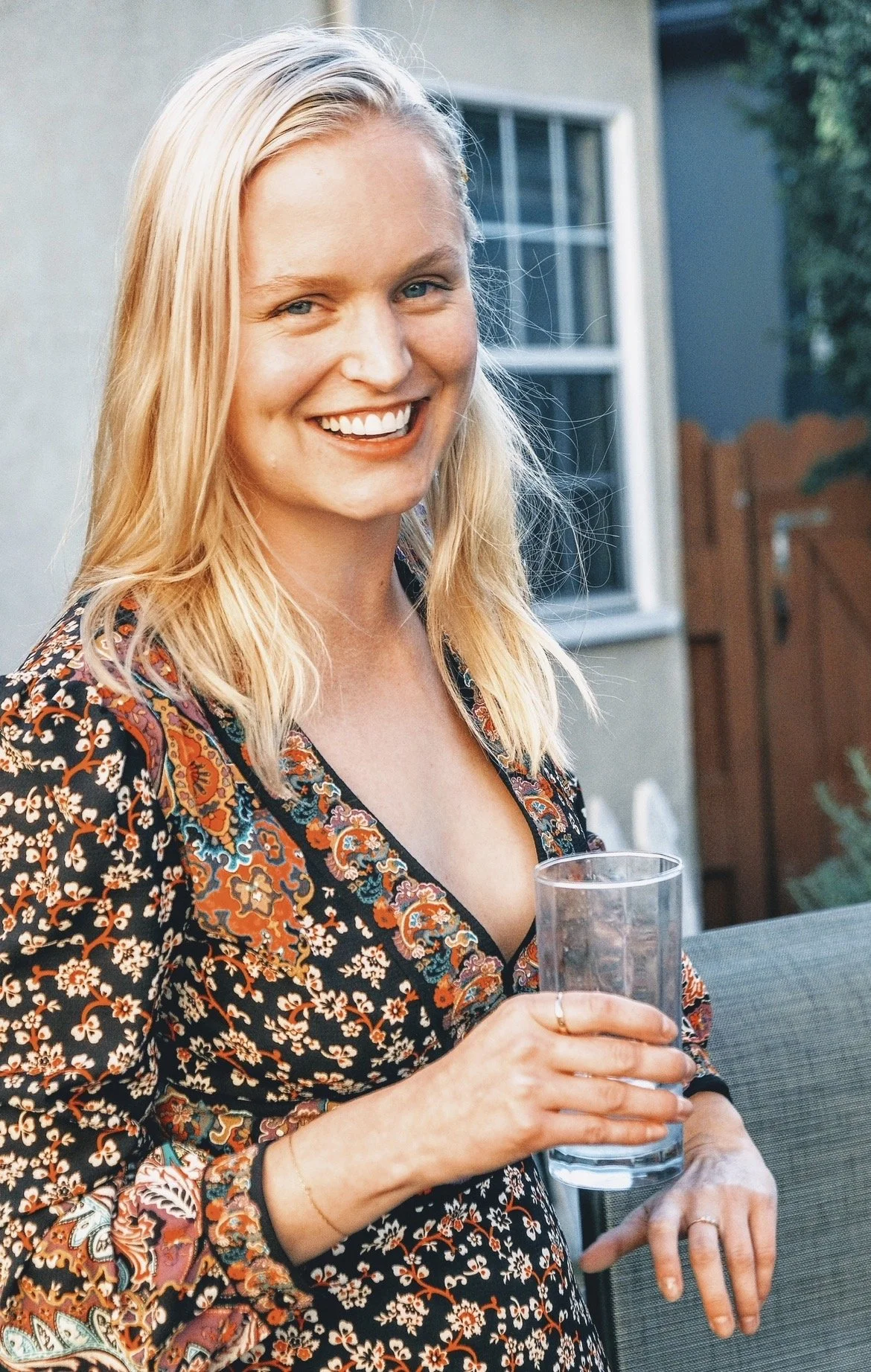
Meet Ayla
I was a teenager in a small southwestern mountain town when I went to see a psychic.
She told me that my life's work would be to help families and children. I walked out of that reading not quite sure what to make of it, still figuring out who I was and what my future held.
Boy was she right.
In 2010 I became a nanny. What started as a way to find my footing turned into 15 years of work I didn't fully have language for until recently — showing up for families in their most tender, chaotic, beautiful, overwhelming seasons. I worked in Albuquerque, New York City, and Atlanta. I worked with families from every kind of background — different nationalities, socioeconomic realities, educational experiences, belief systems.
I learned something meaningful from every single one of them. The last 6 years I worked exclusively with babies and toddlers, becoming deeply versed in gentle sleep shaping, baby-led weaning, and play-based learning. I became, in the truest sense of the word, an infant expert.
But there was another story running underneath all of it — quieter, more personal, and just as formative.
I grew up with a wheat allergy in a time and place where wheat was basically all there was. Sandwiches, pasta, bread — it was what we had, so it was what I ate. What I didn't know then was that every meal was quietly damaging my gut, and that damage was showing up everywhere else: OCD, depression, anxiety, learning disabilities that made school feel like moving through fog while everyone around me seemed to see clearly. I was struggling in ways that felt shameful and inexplicable, and no one was connecting the dots.
I studied Health Education in college — not because I had it all figured out, but because something in me was searching. I had always carried a deep passion for wellness, long before it became a buzzword. But knowing and living are two different things, and for a long time I was better at the first than the second.
Then came years on and off the pill, quietly stripping my body of essential nutrients and deepening the gut damage that had been there since childhood. By the time I got to grad school — navigating the pressure of an advanced degree and an unhealthy relationship simultaneously — my body finally said enough. The official diagnosis was IBS. But what it really was, was a reckoning.
That's when I turned the ship around.
I committed to filtered water, organic food, time in nature, circadian rhythm support, less alcohol, real community, meditation, hypnosis, and strength training. I stopped white-knuckling my way through things that depleted me and started building something instead. Things got better. Not perfect — but meaningfully, undeniably better.
And then I got pregnant.
My pregnancy was hard in ways I hadn't anticipated. I was resentful — genuinely, deeply resentful — that it had to be me. We live in a time where so much is negotiable, so much is shared, so much has been reimagined. But not this. The physical reality of growing a human being fell entirely on my body, and I grieved that in ways I didn't expect and couldn't fully explain. It wasn't the whole story — we found out we were having a girl, and that was its own kind of magic, the kind that catches you off guard and splits you open with joy. But the resentment was real, and I think a lot of women feel it and never hear anyone say it out loud.
So I'm saying it.
After she arrived, I ended up in the ER multiple times with postpartum complications. Pregnancy and childbirth are extraordinary and brutal — what they ask of our bodies and brains is immense, and the support we receive afterward is almost never enough. My postpartum anxiety was intense. And if I hadn't spent years building a foundation of emotional regulation — Dialectical Behavior Therapy, breathwork, meditation, the slow and unwitnessed work of learning how to be in my own body — I'm not sure I would have gotten through it the way I did.
Suddenly, everything clicked into place. The 15 years of holding other families through their hardest seasons. The health education background. The decade-plus of doing my own inner work. The raw, humbling experience of becoming a mother myself. None of it was separate. All of it was preparation.
That's what brought me here. It's the reason Nourish exists.
I know what it feels like when your body is sending signals no one is helping you decode. I know what it feels like to suffer quietly — and I know what it feels like when the right support, the right information, and the right foundation change everything. I've lived both sides of this. And I've spent 15 years sitting beside families in their most vulnerable moments, holding space without judgment, and helping them find their footing.
That's what I bring to this work. Not just knowledge — lived experience, professional expertise, and a deep, unshakeable belief that you deserve support that actually meets you where you are.
I'm so glad you found your way here.
— Ayla